
Calendar of Live Cam Events:
November 2010 Videos
Winemaking -
After the harvest, our grapes are taken into the winery and prepared for primary ferment, at this stage red wine making diverges from white wine making. We will briefly discuss primary fermentation, pressing, temperature stabilization, secondary fermentation, aging and testing.
Red wines -
Red wine is made from the juice (pulp) of red or black grapes that undergo fermentation together with the grape skins.
White wines -
White wine is made by fermenting juice which is made by pressing crushed grapes to extract a juice; the skins are removed and play no further role.
December 2010 Videos
Blending, use of Preservatives, Filtration and Bottling -
Different batches of wine can be blended before bottling in order to achieve the desired taste. Fining agents are used at this stage to remove tannins, reduce astringency and remove microscopic particles. Preservatives are discussed, a final filtration process then to bottling.
January 2011 Videos
Sanitation and maintenance -
The CRW Team begins the process of cleaning and sanitizing machinery, repairing tractors and vineyard equipment. We believe this is a vital and often over looked step by other wineries. The time lapse between grape harvest and the crush pad can be the difference between a gold medal or no medal at all. None of our grapes travel more than 45 minutes.
Topping 2010 Vintages -
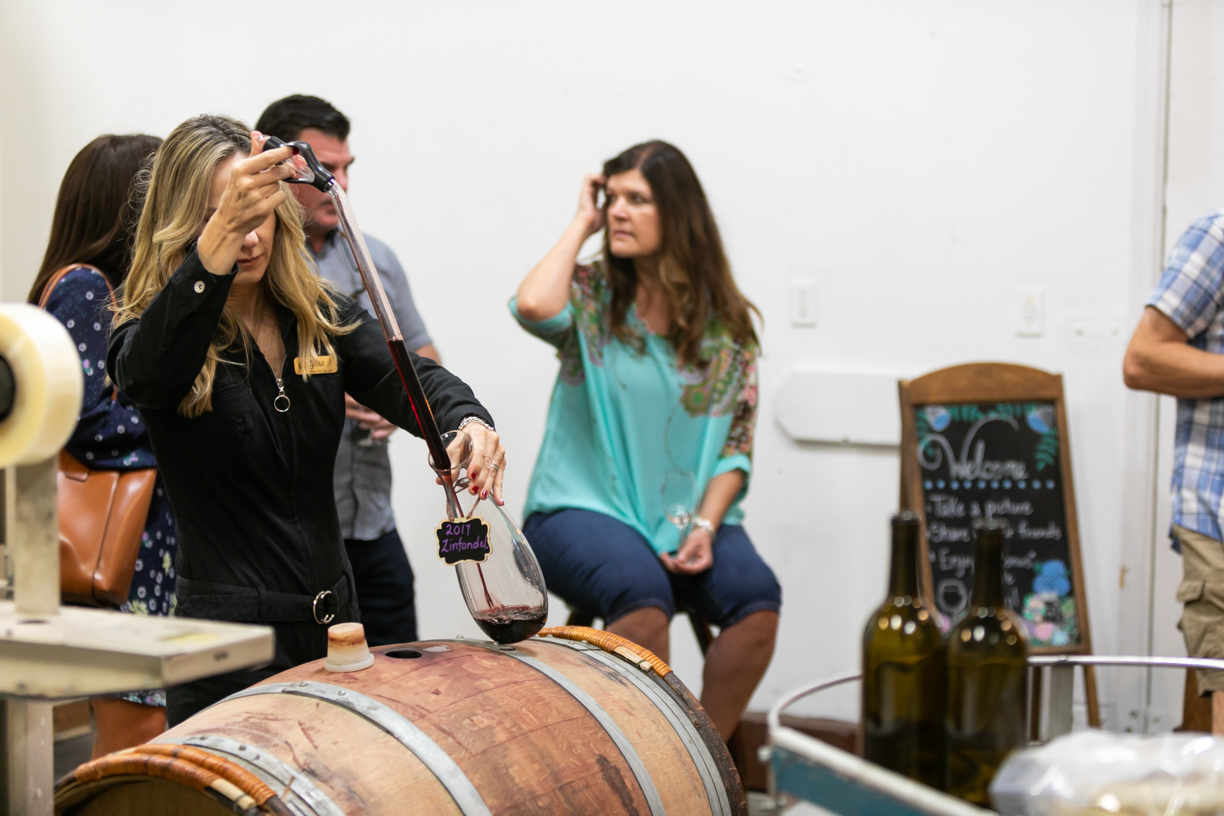
A process performed frequently as the wine volume decreases, more wine is added to reduce air exposure. Too much air exposure results in oxidation, growth of unwanted micro-organisms and potential spoliage of the wine
February 2011 Videos
Pruning -
At Cathedral Ridge we hand prune our vines. This insures a proper foundation for this harvest and the next. Pruning is an art of delicate balance; too much will cause small, uneconomical crops; too little will cause over-cropping and low-quality fruit. It is a skill that requires experience and judgement.
Rack and Return 2010 Vintages -
Fermented red wine is separated from the yeast sediment by racking and then returned to the barrels. The result is a wine with a lower concentration of tannins and a higher concentration of esters, thus exhibiting more fruit character.
Topping 2010 Vintages -
A process performed frequently as the wine volume decreases, more wine is added to reduce air exposure. Too much air exposure results in oxidation, growth of unwanted micro-organisms and potential spoliage of the wine.
March Videos
Bud Break -
This is always an exciting time for us at CRW. With daytime temperatures starting to warm, tiny buds on the vine start to swell, it is the beginning of the vintage! With the warm high desert winds just east of us, we are constantly surveying our vineyards for premature bud break. Our vineyard team is at the ready for any and all signs which may put our crop in jeopardy.
Rack and Return 2010 Vintages -
Fermenting red wine is separated from the grape solids by racking and then returned to the fermenting vat to re-soak the solids. The result is a wine with a lower concentration of tannins and a higher concentration of esters, thus exhibiting more fruit character.
Topping 2010 Vintages -
A process performed frequently as the wine volume decreases, more wine is added to reduce air exposure. Too much air exposure results in oxidation, growth of unwanted micro-organisms and potential spoliage of the wine.
Bottling 2010 Vintages -
Riesling.
April Videos
Shoots grow -
After bud break, the young shoots are very vulnerable to frost damage. We are prepared for fluxuating spring Temperatures.
Bottling 2010 Vintages -
Neccessity Red, Riesling and Chardonnay.
May 2011 Videos
Grapes flower and set -
40-80 days after bud break the process of flowering begins. It is during this stage that the pollination and fertilization of the grapevine takes place, with the resulting product being a grape berry. After fruit set we go back into our vineyards to start one of our many labor intensive thinning processes to ensure sunlight reaches each grape berry and a proper crop balance. implement a balanced spray regime of nature sulfur and mineral oil.
Bottling 2010 Vintages -
Bordeaux blends.
June 2011 Videos
Vines grow in the warm Columbia Valley Sun -
Following fruit set, the grape berries are green and hard to the touch. They have very little sugar and are high in organic acids. We monitor climate, health of the vine and water stress which plays an important role during this growing process.
Bottling 2010 Vintages -
Pinot Gris.
July - August Videos
Veraison -
This stage signals the beginning of the ripening process and normally takes places around 40-50 days after fruit set. During this stage the colors of the grape take form-red/black or yellow/green depending on the grape varieties. Another labor intensive thinning process occurs. Unlike many wineries we "fruit thin" our clusters, allowing only the healthiest clusters to continue on to capture and intensify the vines energy to the remaining grape cluster.
- Sign up for our Vineyard and winery operations Tour
Bottling 2010 Vintages -
Merlot, Cabernet Sauvignon and Syrah.
September - October 2011 Videos
Harvest Video -
the grapes are removed from the vine and transported to the winery to begin the wine making process. Sugar and pH levels increase while natural acids decrease. The balance of these factors contributes to when owner and celllarmaster Robb Bell decides when it is time to harvest. - See featured video above.